Warehouse-grade security for freight in motion.

Inside your warehouse, inventory sits behind controlled access, documented custody and video surveillance. Then it ships, and you hand hundreds of thousands of dollars of it, sometimes millions, to a virtual stranger, protected by a lock, a seal and a tracking device that only tells you where the device is. Transit Fortress carries your warehouse's protection the rest of the way.

The problem

Cargo thieves know how freight is tracked.

Cargo theft in the U.S. is mostly organized work now. The crews behind it know where tracking devices tend to be placed, how they report, and which alerts a shipper is likely to write off as noise. They plan around all of it.

Most monitoring in use today was built to answer one question well: where is the shipment? That still matters. When a load is being stolen, though, a shipper needs to know something harder, soon enough to act on it, and with enough proof that the police will act too.

$6.6BAnnual cost of cargo theft to the U.S. trucking industry, or about $18 million a day
60%Increase in cargo theft losses from 2024 to 2025
$273,990Average loss per theft in 2025, up 36% from the year before

Sources: American Transportation Research Institute, October 2025 (annual and daily cost). Verisk CargoNet 2025 supply chain risk analysis (loss growth and average loss per theft).

What we're building

A verified chain of custody for every truckload.

Your warehouse already keeps a record of who handled what, and when. We're extending that record to the truck, from the moment a load leaves your dock until it's signed for at the other end.

  • Who has the load

    Confirmation that the right carrier and driver picked it up, and that they still have it.

  • Whether anyone has been inside it

    We detect and verify every access event, and tell you whether it was supposed to happen.

  • Alerts worth answering

    The system learns what a normal run looks like on each lane. Routine stops stay quiet, so when we call you, it's real.

  • Evidence that holds up

    A time-stamped record for the people who decide how fast to respond and whether to pay a claim: law enforcement, insurers and your own customers.

That's about as much as we put on a public website. Under NDA, we're happy to show you how it works.

Why we started

For several years I ran logistics for a consumer electronics company. Our products were easy to resell, which made them a target, and we lost millions of dollars of freight to organized theft. Most of it went missing on a handful of lanes we knew well.

We weren't careless. We bought monitoring from the two biggest names in the business and took it seriously. It told us where our trucks were, which is what it was designed to do. What I couldn't get was certainty: knowing who had our freight and what was happening to it, early enough to stop a loss, with enough behind it that the police would treat the call as urgent.

In 2004 I wrote my own fraud scoring for an e-commerce business, because nothing on the market did what we needed. Cargo security is a similar problem. There are a lot of weak signals and very little time to decide which ones are real. The technology to do that well for freight is finally here, so Chris and I decided to build it.
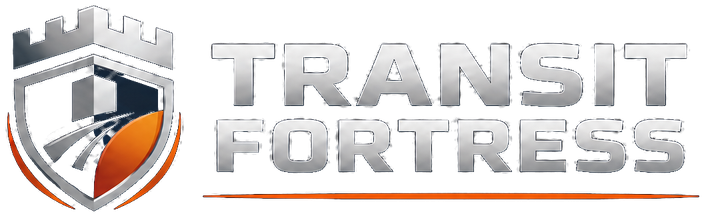
John AppsCo-founder and CEO
Team

The founders

John Apps

John Apps

Co-founder and CEO

John has been VP of IT, VP of Operations, and VP of Logistics and Distribution at NASDAQ-listed technology companies. He started his career as a founder, built that company through its acquisition by a public company, and stayed on as an executive. He has an Executive MBA from Santa Clara University.

PreviouslyOCZ Technology · OCZ Storage Solutions, a Toshiba Group Company · Drobo · Corsair

LinkedIn
Christopher Jacobs

Christopher Jacobs

Co-founder and CTO

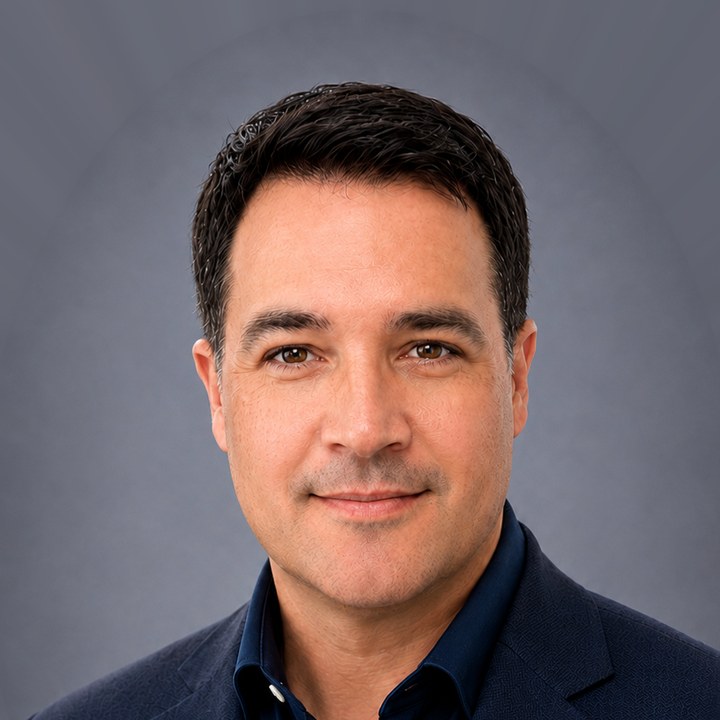
Chris leads engineering. He has built consumer electronics, enterprise networking products and distributed systems, and has run full-stack teams shipping both customer-facing products and the internal platforms companies depend on.

PreviouslyOCZ Technology · Toshiba · Drobo · Palo Alto Networks · Origin Protocol

LinkedIn

John and Chris worked together for more than ten years at OCZ, Toshiba and Drobo before starting Transit Fortress.

Progress

Where things stand

  1. August 2026

    Transit Fortress Inc. incorporatedDelaware corporation, headquartered in San Jose, California.

  2. September 2026

    Patent applications filed with the USPTOAdditional filings are in progress.

  3. Fall 2026

    Working prototypeDesigned and built in-house.

  4. Now

    Talking with shippers about design partner pilots

Work with us

Two ways in

Shippers: become a design partner

We're choosing a small number of shippers to run 60-day pilots on their own lanes, at no cost to them. Before we start, we agree in writing on what success looks like. At the end, we report against it, including anything that fell short.

A good fit usually has:

  • Five or more full truckloads a week
  • U.S. domestic lanes
  • Freight that's easy to resell, such as electronics, apparel, food and beverage, metals or auto parts
Tell us about your freight

Investors and accelerator programs

We're glad to share our deck, walk through the product and go deeper on the market under NDA. The quickest way to start is a 30-minute call with John.

Request a briefing
Contact

Get in touch

A founder reads every message. We usually reply within two business days.

We use what you send only to reply to you. See our privacy policy.

Prefer email? sales@transitfortress.com